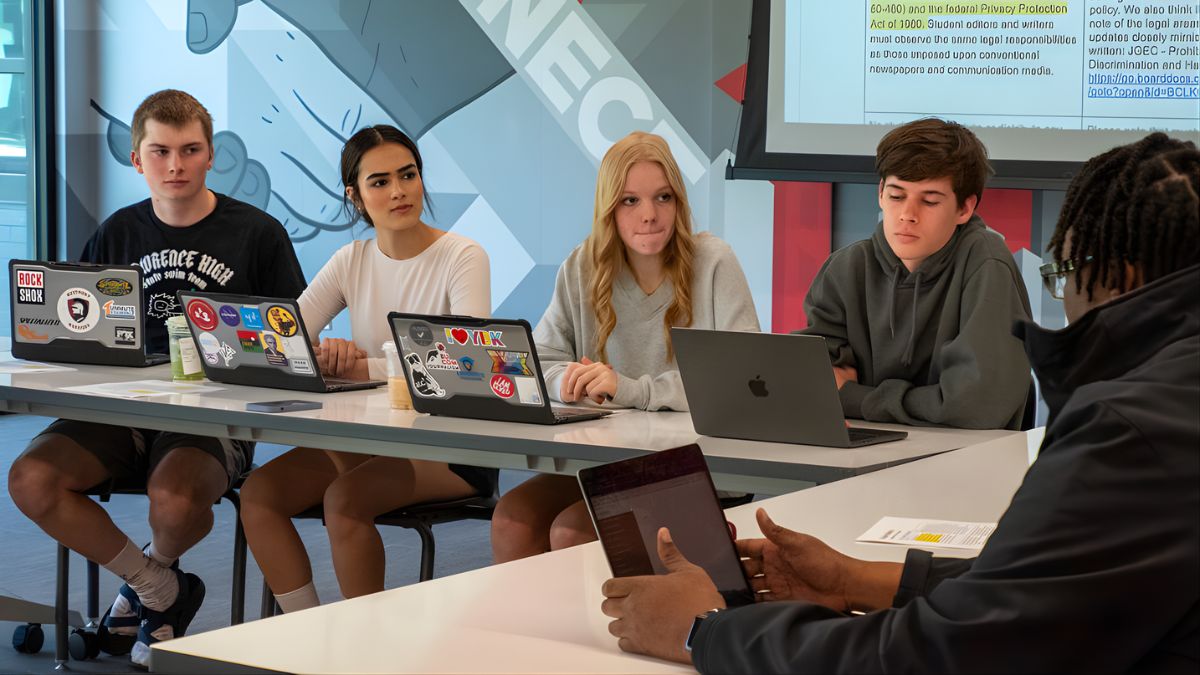
A student press badge may appear to be a simple identification card, but it carries significant responsibility. It represents access, credibility, and trust. When students step into reporting roles within schools, colleges, or universities, they are not merely covering events – they are documenting real stories, real people, and real consequences.
In an era of rapid information sharing, the role of student journalists has grown more complex. The badge is not just a symbol of permission to attend events or interview administrators. It is a reminder of ethical standards, accountability, and public service.
Meaning
A student press badge identifies the holder as a member of a recognized student media organization. This could include a school newspaper, digital publication, broadcast station, or yearbook team.
Beyond access, the badge signals responsibility. It tells sources and readers that the student is committed to gathering and presenting information accurately. In many educational institutions, student journalists operate with editorial independence while still functioning within school guidelines.
This balance between independence and institutional structure requires maturity and sound judgment.
Access
The badge often grants entry to meetings, sports events, assemblies, and sometimes restricted areas. It may also provide opportunities to interview faculty members, student leaders, or visiting guests.
However, access does not guarantee unlimited authority. Student journalists must respect boundaries, follow event rules, and comply with safety protocols.
The distinction can be outlined clearly:
| Privilege | Responsibility |
|---|---|
| Event access | Follow rules and guidelines |
| Interview opportunities | Respect consent and accuracy |
| Publication platform | Verify facts before release |
| Public visibility | Maintain professionalism |
Access without responsibility risks undermining trust in student media.
Ethics
Ethics form the foundation of journalism at every level. For student reporters, ethical considerations include fairness, accuracy, transparency, and respect for privacy.
Students must confirm facts before publication, avoid spreading rumors, and present multiple perspectives when reporting on sensitive issues. Even within a school setting, misinformation can harm reputations and disrupt communities.
Plagiarism, biased reporting, or manipulation of quotes not only damage credibility but also weaken the integrity of the entire publication. A press badge requires adherence to established journalistic principles.
Accountability
Unlike anonymous online posts, student journalism carries identifiable authorship. Articles often include bylines, making writers accountable for their reporting.
If errors occur, corrections should be issued promptly. Learning to acknowledge mistakes is part of responsible journalism. Educational institutions often view student media as a training ground, but that does not diminish the real-world consequences of published content.
Accountability teaches students how public communication affects communities.
Professionalism
Professional conduct extends beyond writing. It includes punctuality, respectful communication, appropriate attire at formal events, and clear identification when gathering information.
When interviewing peers, administrators, or community members, student journalists must explain the purpose of the conversation and how the information will be used. Transparency strengthens trust and prevents misunderstandings.
Professionalism also involves separating personal opinions from factual reporting unless writing clearly labeled opinion pieces.
Impact
Student media often serves as a primary source of information within educational institutions. Coverage of policy changes, academic achievements, student initiatives, or campus concerns can influence dialogue and decision-making.
For example, reporting on facility improvements may highlight student needs. Coverage of student achievements may encourage participation in extracurricular activities.
Although the audience may be limited to a school or campus, the impact can be substantial.
Challenges
Holding a press badge as a student can present challenges. Peer relationships may become complicated when reporting on sensitive topics. Balancing academic responsibilities with publication deadlines requires time management.
Additionally, student journalists may encounter resistance when covering controversial issues. Navigating these situations demands careful judgment and adherence to ethical standards.
Institutions that support student press freedom often provide advisors who guide students without controlling editorial decisions. This mentorship helps maintain both independence and responsibility.
Growth
The student press experience often serves as preparation for future careers, not only in journalism but in law, public relations, business, and public service. Skills developed include research, critical thinking, interviewing, writing, and ethical reasoning.
The press badge, therefore, represents both opportunity and obligation. It signals readiness to participate in informed dialogue and to contribute responsibly to the information environment.
A student press badge is more than an identification card. It symbolizes trust placed in students to inform their communities accurately and fairly.
With access comes responsibility. With visibility comes accountability. When student journalists uphold ethical standards and maintain professionalism, they strengthen both their publications and their institutions. The badge is not merely worn – it is earned through consistent integrity.
FAQs
What is a student press badge?
An ID for recognized student journalists.
Does it grant unlimited access?
No, rules and limits still apply.
Why are ethics important?

They protect accuracy and credibility.
Can student journalists face consequences?
Yes, for errors or misconduct.
Is student journalism real journalism?
Yes, with professional standards.