
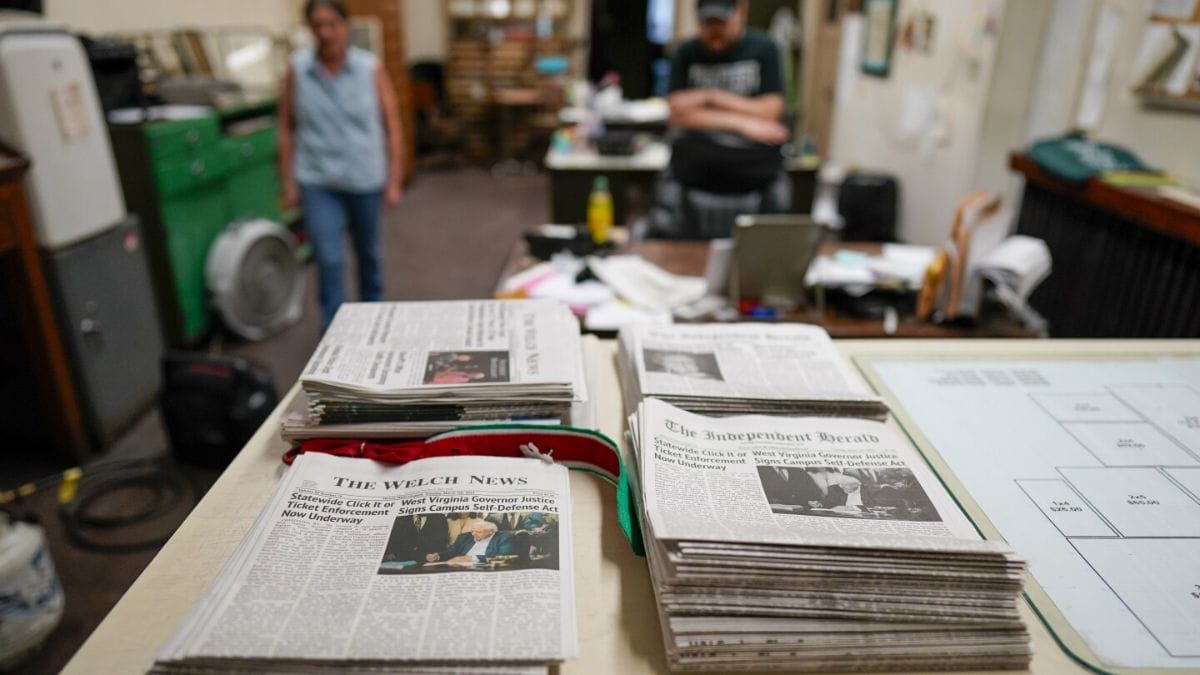
Across cities and small towns alike, a quiet crisis is unfolding: the steady decline of local news. As newspapers close, newsrooms downsize, and reporters disappear, communities are losing more than just headlines – they are losing connection, accountability, and a sense of shared identity.
Local news once served as the heartbeat of civic life. Today, its decline raises a critical question: what happens to a community when no one is watching, reporting, or telling its story?
Closures
The most visible sign of this decline is the closure of local newspapers. According to recent studies, the U.S. has lost over 2,500 local news outlets since 2005. Some towns are now considered “news deserts” – communities with no original local news coverage at all.
With each closure, vital stories go untold: city council decisions, school board meetings, local crime reports, zoning changes, community events. These are not stories covered by national media – and without local journalists, they often vanish.
Oversight
One of local journalism’s most essential roles is oversight. Reporters attend government meetings, question public officials, and investigate local issues. Without this presence, public institutions operate with less transparency.
In areas where local news has vanished, research shows a rise in corruption, reduced civic engagement, and higher public spending. When no one is watching, accountability suffers – and communities pay the price.
Engagement
Local journalism also fosters civic engagement. When people read about issues affecting their neighborhood, they are more likely to vote, attend meetings, or volunteer. Local news provides the information needed to participate in democracy meaningfully.
Without it, residents are left uninformed or misinformed. National or social media may dominate their attention, but those platforms rarely provide the details needed for local action. The result? A disengaged public with fewer tools to shape their own communities.
Identity
Local news tells a community’s story. It highlights local achievements, preserves traditions, and records everyday moments. These stories build a shared identity – a sense of “who we are” and “what we value.”
As local coverage fades, this narrative weakens. Communities lose touch with their own voices and histories. The spotlight shifts to national events, while the richness of local life becomes invisible.
Inequality
The decline in local news does not affect all communities equally. Wealthier urban areas often have alternative sources – nonprofit outlets, digital startups, or university publications. But rural areas, small towns, and lower-income neighborhoods are hit hardest.
This creates a growing information gap. Some citizens remain well-informed and empowered; others are left in the dark. The decline of local journalism is not just a media problem – it is a democratic one.
Misinformation
In the absence of credible local reporting, misinformation fills the gap. Social media becomes the default source for news, even though it often lacks accuracy or context. Rumors spread more easily, and conspiracy theories take hold.
Trusted local outlets once acted as filters, verifying facts and correcting errors. Without them, communities become more vulnerable to falsehoods – and the consequences can be serious, especially during elections, public health crises, or natural disasters.
Economy
Local news supports the economy in subtle but important ways. It promotes small businesses through advertising, helps attract new residents by spotlighting local culture, and even affects home values by contributing to community reputation.
As newsrooms shrink or close, these economic benefits shrink with them. Fewer local stories mean fewer opportunities for local visibility, recognition, and growth.
Innovation
Some communities are responding to the decline with creative solutions. Nonprofit newsrooms, community-funded publications, and local newsletters are stepping in to fill the gap. But sustaining these efforts is challenging without long-term funding and consistent public support.
Innovation is promising, but it cannot fully replace what has been lost without a broader recognition of local journalism’s value – and a willingness to invest in it.
Local news is more than a product. It is a public good – essential to civic health, social trust, and community resilience. As it declines, the costs are clear: less transparency, weaker engagement, growing division. The question now is not whether communities can survive without local journalism – but what kind of communities we become when it is gone.
FAQs
What is a news desert?
A community with no local news coverage or local reporters.
How does losing local news affect democracy?
It reduces accountability, civic engagement, and voter awareness.
Can social media replace local news?

No, it often spreads misinformation and lacks verified reporting.
Are nonprofit news outlets helping?
Yes, but they need more funding to be sustainable long term.
Why does local journalism matter economically?
It supports local businesses, visibility, and community identity.